Affordable to acquire. Simple to sustain.
Fixed-pitch main rotors, no swashplate and no cyclic mechanism. Common heavy fuel, accessible systems and quick-release blades keep the maintenance and logistics burden down.
TACTICAL AIR MOBILITY · MEDIUM LIFT
A heavy-fuel VTOL platform for resupply, logistics, airborne relay and specialist mission equipment.

You can still explore all specifications below.
TAMML / COMPONENT STUDIO
Drag or use arrow keys to rotate
Maximum payload
Empty aircraft
Main rotor diameter
UAVHE coaxial powerplant
Move supplies to dispersed teams. Put your equipment in the air. Build a regular airbridge with a common aircraft.
TAMML brings heavy-fuel endurance and vertical take-off to missions that cannot depend on a runway or a road convoy. A modular payload bay, open electrical and data interfaces, and an adaptable communications architecture put the customer’s mission first.
Built for repeat operations ↗Fixed-pitch main rotors, no swashplate and no cyclic mechanism. Common heavy fuel, accessible systems and quick-release blades keep the maintenance and logistics burden down.
Start with one route. Add aircraft as demand grows. Mesh-connected fleets and a common airframe support volume deployment, shared spares and repeat sorties.
Cargo, a winch, a liquid tank, sensors or a relay package. Reconfigure the payload around the task and connect to your existing command and mission systems.
Logistics and customer payloads at the centre. Reconfigure the same platform for land, maritime, agricultural and emergency operations.
Carry water, rations, ammunition, batteries, medical stores and equipment to dispersed positions. Repeated uncrewed shuttles reduce the need to expose personnel and vehicles on the last leg of the supply chain.
Single or tandem containers · extended cases · transport bags

A dedicated enclosed transport configuration supports the recovery and evacuation of human remains from difficult ground. Plan collection, secure handling, the return leg and the receiving team as one operation.
Enclosed transport module · recovery logistics · receiving-team handover
Move stores between ships, shore facilities and island outposts. Vertical flight serves sites without runways; heavy-fuel operation fits maritime supply chains. AIS awareness and precision landing connect the flight to the vessel and its landing area.
Ship-to-shore supply · island replenishment · offshore support

Carry a communications payload or use the aircraft as a node in a Silvus MANET mesh. Relay command, telemetry and live video between aircraft and ground teams, with LEO satellite connectivity extending the network beyond line of sight.
Silvus StreamCaster · inter-aircraft relay · TAK / existing C2
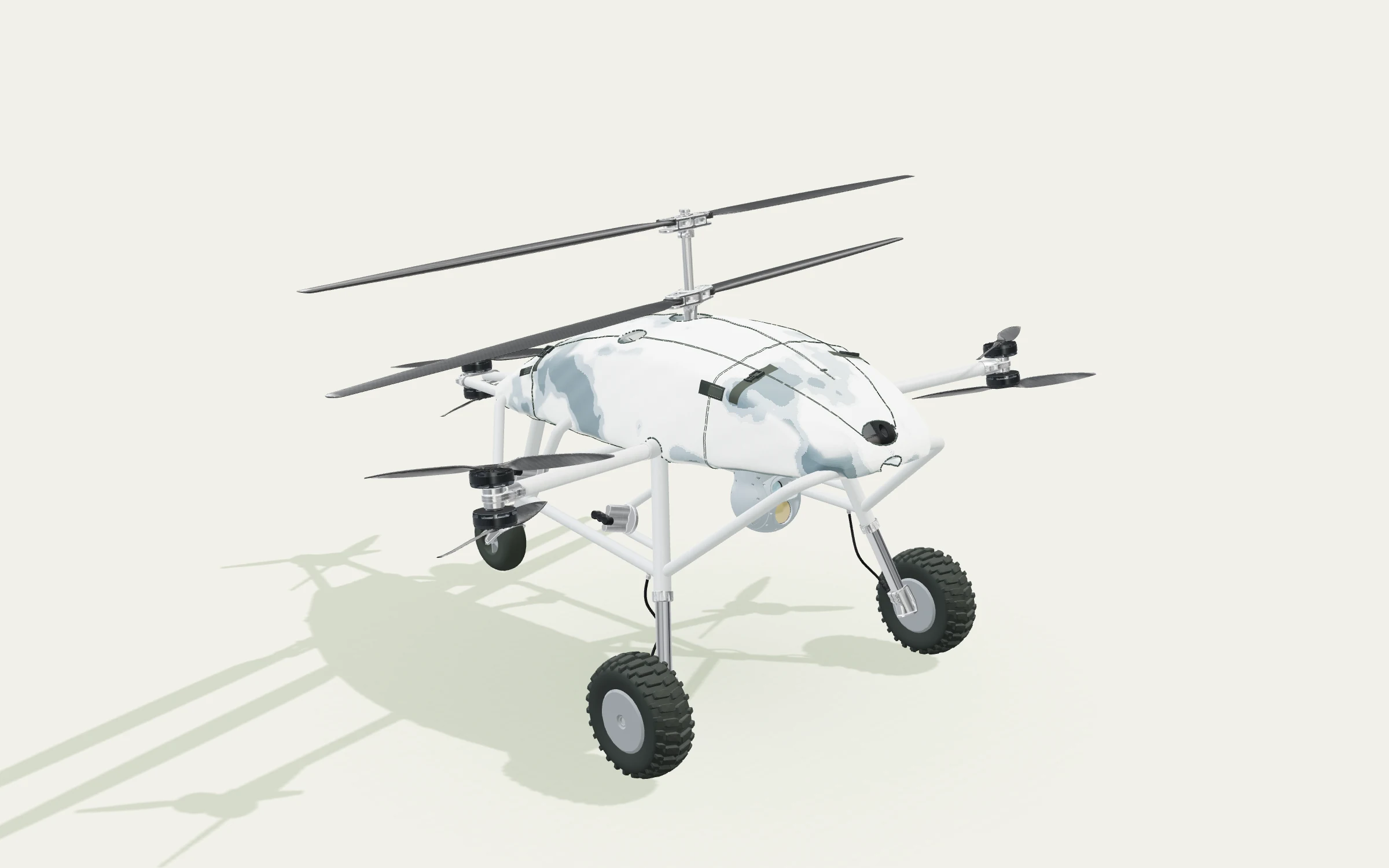
Integrate EO/IR observation, mapping, inspection or signals-monitoring equipment. The open bay and electrical/data interfaces support customer-owned mission systems, connected to the operator’s existing workflow.
EO/IR · multispectral monitoring · specialist mission equipment

Spray crops with a liquid tank and application booms. Configure for seeding, crop monitoring and delivery, or integrate a winch for aerial-crane work. One platform supports the flight, the field operation and the logistics between them.
Spraying · seeding · monitoring · delivery · aerial crane
150 L tank, application booms and section control. Set the application rate, then plan the refill cycle.

A hopper and spreader carry seed or granules. Work by mass per hectare and replenish at the service point.
Carry multispectral or optical equipment. Connect survey imagery and crop observations to the farm’s mapping workflow.
Bring materials to the field, deliver equipment and use a winch or suspended-load arrangement for aerial-crane tasks.
AGRICULTURAL MISSION SOFTWARE
Plan and manage agricultural operations with the software your team already uses.

An exposed liquid tank carries fire-fighting media beneath the light-grey upper cover, without agricultural spray booms. Support the wider response with equipment delivery, observation and resupply to crews working beyond road access.
Liquid tank · fire-fighting livery · response logistics
Start with the equipment you need to carry. Choose how it mounts, how it is powered and how its data reaches your team. The aircraft fits into your mission chain.
Your equipment, mounted inside the common aircraft envelope.
Explore the winch in 3D ↗Usable space, mounting points, retention loads and centre of gravity are defined for the complete mission module.
Supply up to 8 kW to the mission payload through stabilised DC power and integrated power interfaces.
Bring equipment control, status and mission data into your existing ground systems, TAK or C2 environment.
ENGINEERING HANDOVER
Dimensional drawings · CAD envelope · mounting and CG definition · electrical and data Interface Control Document.
Request integration package ↗Choose the task, then balance fuel, module and cargo. Plan each flight leg, the work at destination and the turnaround for the next sortie.
Cargo leaves the aircraft at the delivery point. The empty module returns to base.
25 L standard + 4 × 20 L external · Jet A-1 / JP-8
Complete removable module: cargo, container, mounts and mission equipment.
Set the values for your load and operating cycle.
70 kg available
Fuel and payload share the same 260 kg takeoff limit.
260 kg maximum takeoff mass · 15% fuel reserve.
Deliver and return
At maximum mission reach
Level flight at takeoff mass
Hover to compare · Click or drag the curve to select · Sliders always stay within 260 kg
All profiles retain 15% of starting fuel on landing. The VTOL/hover input is included in the flight fuel budget. The solid radius curve holds your selected payload. Its dashed continuation reduces payload when more fuel would exceed 260 kg. The speed chart holds your selected fuel on its solid section and reduces fuel on its dashed section. Every point follows the same load-balancing rule as the sliders. The module mass is retained on the return leg; delivered cargo is removed. All task inputs are operator settings. The 150 L liquid-tank capacity and the 260 kg takeoff limit apply together. Cruise is 80% of maximum speed at departure on each leg. The lift profile uses your selected transit speed, limited by that cruise target. Fuel consumption follows changing aircraft mass. Application work consumes material progressively; relay and monitoring retain their equipment throughout the mission. Work on station uses hover fuel consumption.
Fuel capacity is 25 litres in the standard tank, plus four external 20-litre tanks: two on each side. Total capacity is 105 litres. The fuel and payload controls balance automatically within the maximum takeoff mass.
Connect a supply point to dispersed teams with a repeatable cycle. Ground handling, flight, unloading and the next departure are all part of the same operation.
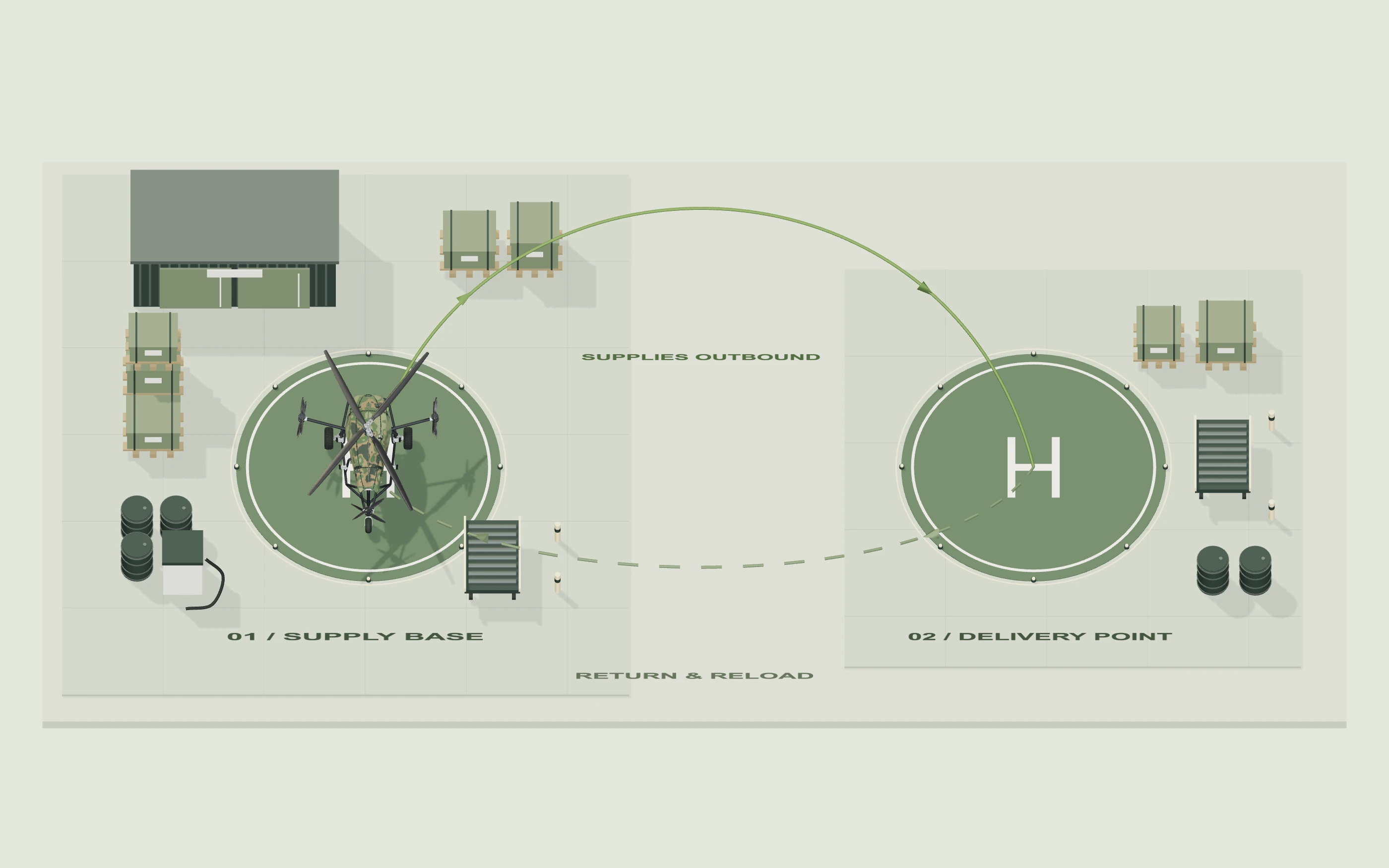
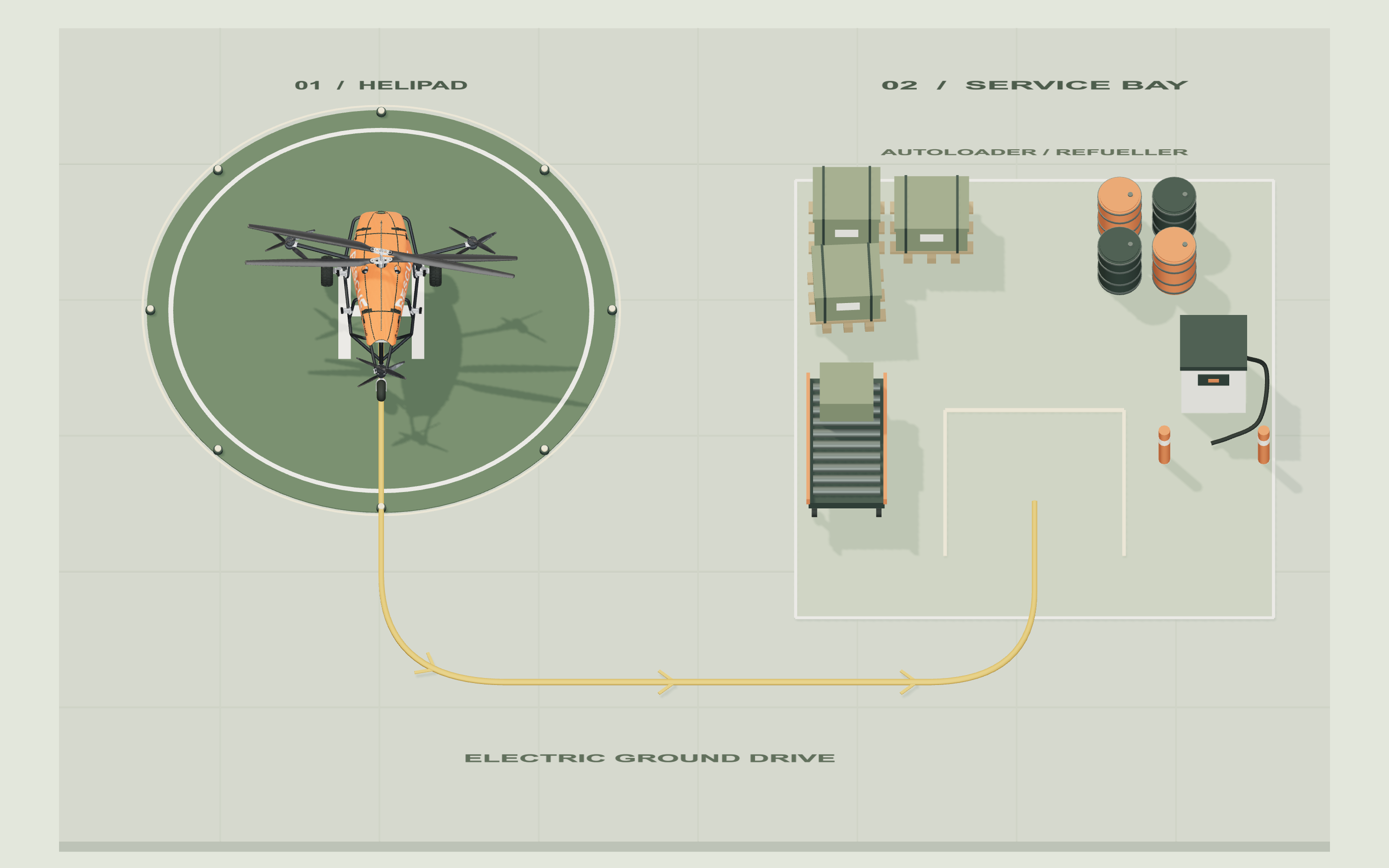
Position at the service bay, load the mission module and set fuel against payload and distance. Electric ground drive connects loading to the take-off area.
Launch vertically and move stores to the receiving team. Command, telemetry and payload data remain connected through the selected radio and satellite network.
Land and approach the unloading position, or use the integrated handling equipment selected for the mission. Transfer supplies and prepare the return load.
Return to the supply point with reusable containers, equipment or a recovery load. Plan each leg around its own payload, fuel requirement and landing site.
Unload, refuel and fit the next load. Stagger aircraft departures to sustain a regular airbridge while other aircraft are being handled or serviced.
TAMML moves under its own power across the apron and around the take-off area. Onboard autonomy navigates around obstacles and yields to traffic. Electric wheel drives provide up to 50 km of ground travel, with the ability to turn on the spot and position the aircraft for servicing.
Full-sphere camera coverage
mmWave radar
Weight-on-wheels sensors
A connected mission platform: mesh and satellite links, integrated GNSS/INS navigation, precise landing and full-sphere awareness. Operate through your network or directly at the onboard console.
MISSION SYSTEMS / CUSTOMER NETWORK
Silvus MANET mesh, Starshield LEO SATCOM and TAK connect the aircraft to your existing command network. Septentrio navigation, UAVLAS precision landing and ADS-B In support the mission from departure to touchdown.
Silvus StreamCaster · MIMO MANET
Command · Video · Telemetry
Silvus StreamCaster MIMO MANET provides a self-forming, self-healing mesh for encrypted command links and full-motion video. Each aircraft can relay traffic between other nodes.
Starshield LEO SATCOM extends command, telemetry and mission-data connectivity beyond the line-of-sight mesh. Starlink and Amazon Leo terminal options support other operating requirements.
TAK integration and open information interfaces connect position, command and mission information to the customer’s C2 and ground network. Keep the tools and workflows already in service.
Battle-proven core systems — not bespoke prototypes.
GNSS/INS with AIM+ anti-jamming and anti-spoofing protection.
Explore navigation ↓Precision approach and landing, supported by radar height and weight-on-wheels sensing.
Explore landing ↓Receives surrounding aircraft position and traffic reports for onboard airspace awareness.
Explore awareness ↓01 / ELECTRONICS & ESC
A dedicated onboard assembly brings together the electronics and electronic speed controllers. It connects the aircraft’s sensing, control and electric propulsion systems.
02 / SATELLITE CONNECTIVITY
An onboard satellite terminal supports remote connectivity. Terminal options include Starshield, Starlink and Amazon Leo, according to the aircraft configuration.
03 / SENSING & LOCAL CONTROL
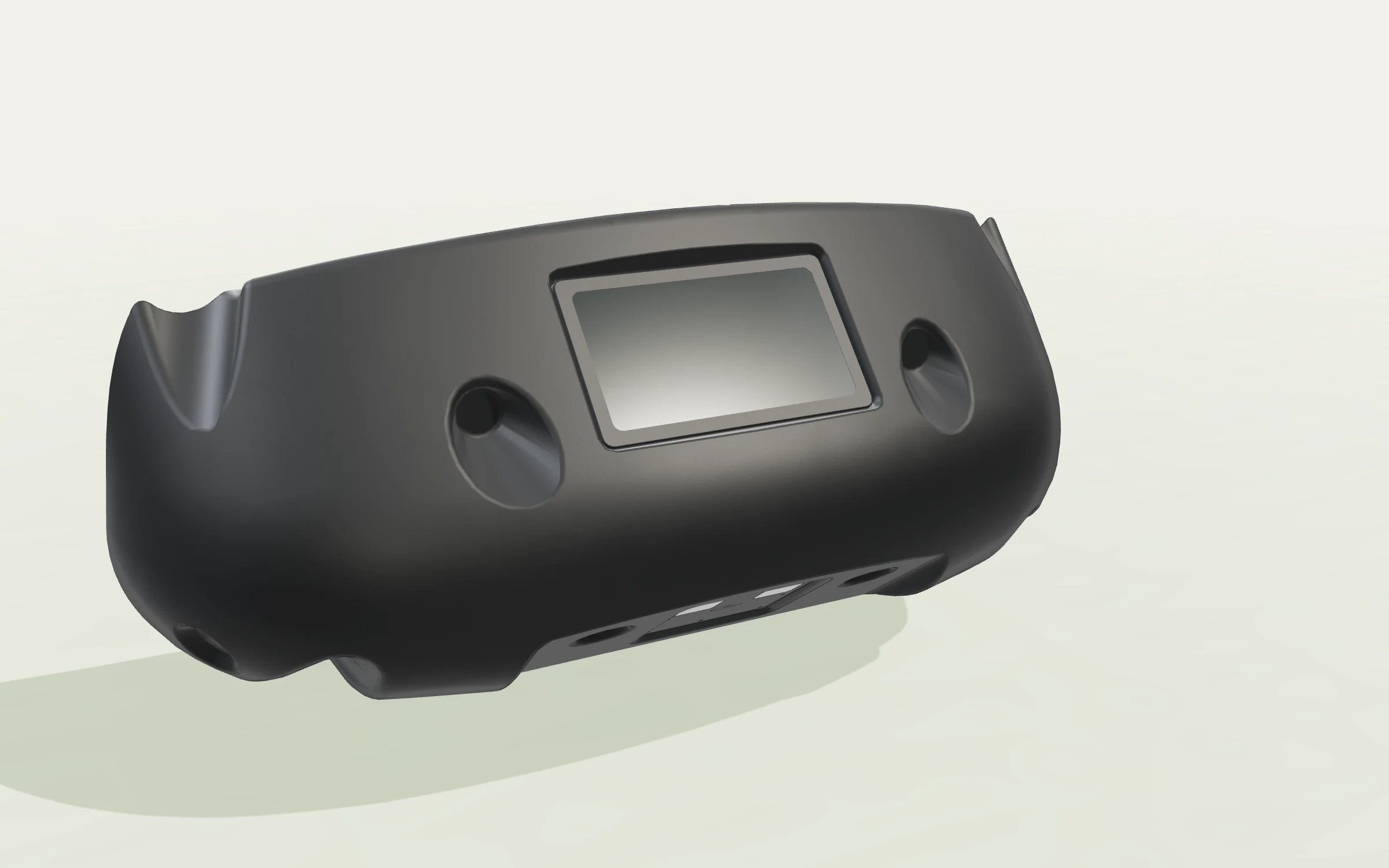
A local camera, sensor block and onboard terminal display support ground servicing and control without an external terminal. They form part of a distributed sensing system with multiple cameras, mmWave radar and weight-on-wheels sensors.
PERCEPTION & AUTONOMY
Multiple cameras provide a combined view in all directions, covering both the upper and lower hemispheres. Multispectral sensing and mmWave radar complement the camera network.
In flight, the aircraft detects collision risks and automatically manoeuvres to maintain separation from surrounding traffic.
Edge processing handles local navigation on the aircraft. TAMML routes around obstacles, yields to traffic and continues to its loading, unloading or refuelling position.
THE COMMUNICATIONS STACK
Voice commands over conventional VHF radio add another way to interact with the aircraft.
Service interval
MTBO
Operating temperature
Move the aircraft and its support equipment as a self-contained detachment. Establish the loading point, connect the network and operate from a compact take-off area.
Transport the aircraft, payload modules and ground equipment to forward supply points. Quick-release blades reduce the handling envelope.
Deploy with ships, coastal bases and island detachments. Share the heavy-fuel supply chain and establish ship–shore logistics.
Move the complex by air to the operating area, then assemble the rotor system, configure the payload and prepare the ground support point.
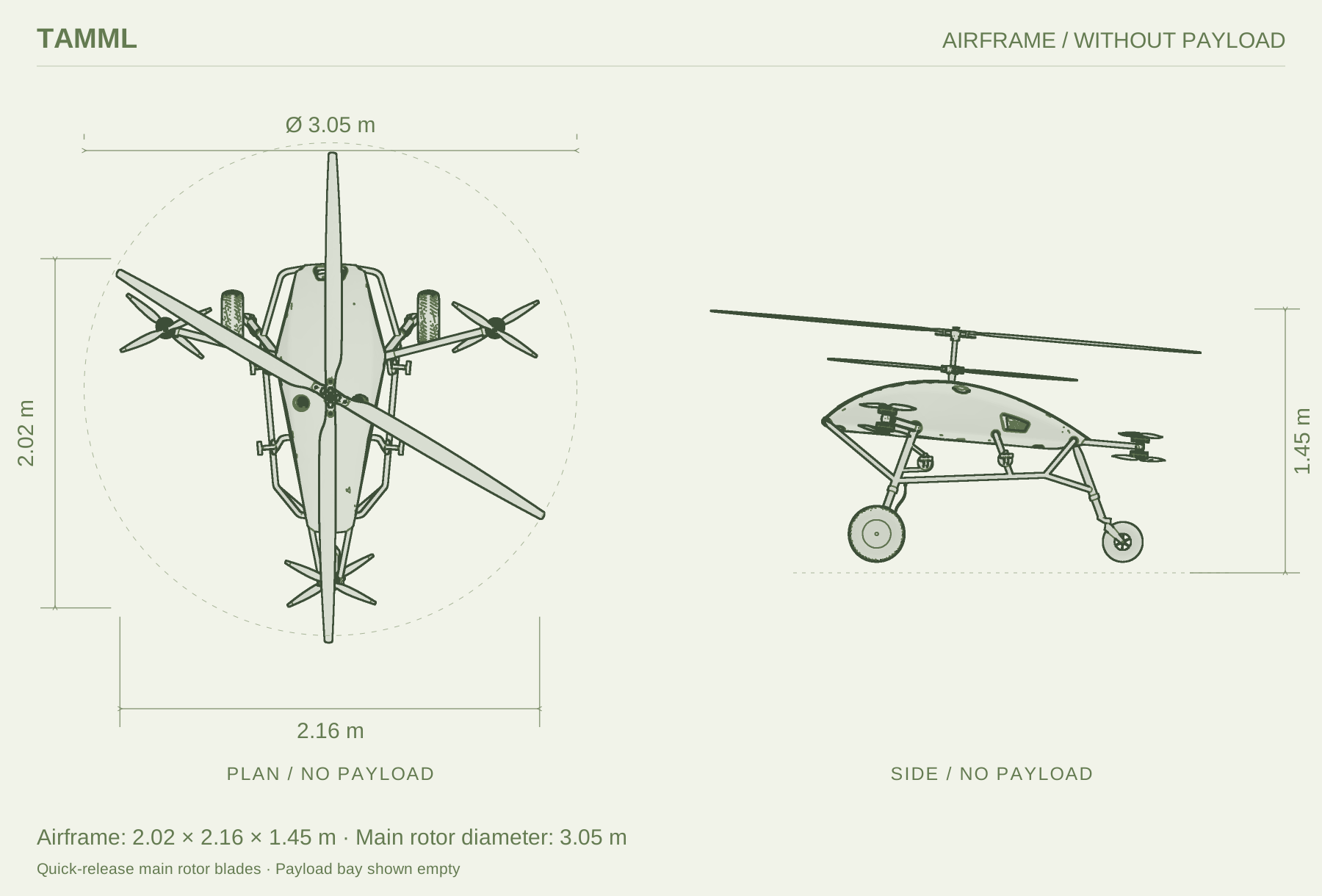
KNOW THE FOOTPRINT
Airframe dimensions exclude the main rotor sweep. Remove the quick-release blades for transport; the airframe occupies a 2.02 × 2.16 m rectangular footprint.
Flight configuration · 3.05 m rotor sweep
PLAN THE WHOLE DETACHMENT
Medium-lift capability at around one-third the acquisition cost of comparable medium-lift UAS. A simple mechanical architecture and a common fleet keep the focus on the cost of getting each load to its destination.
Payload per sortie, route distance, fuel, handling time and aircraft availability determine delivered throughput. Ground taxi and repeat loading connect flight performance to the working supply chain.
Explore load & reach ↗A design built for volume production supports scalable deployment. Add aircraft to a route, share modules and spares, and stagger sorties to maintain the airbridge during loading or maintenance.
Explore the sortie cycle ↗Fixed-pitch rotors remove the swashplate and cyclic mechanism. Quick-release blades, an accessible titanium frame and heavy-fuel operation simplify transport, servicing and the field supply chain.
Explore the aircraft ↗TWO ENGINES. ONE COAXIAL ASSEMBLY.
A hybrid rotary powerplant. Two UAVHE RW1-79 Wankel engines. One compact coaxial assembly.
The RW2-79C combines 52 hp of engine power with a 22 kW hybrid electric system. Forced-air cooling supports the compact installation. Two counter-rotating, fixed-pitch main rotors provide lift without a swashplate or cyclic mechanism. Six electric control propellers manage attitude, supported by two independent power-management systems and redundant electrical supplies.
Explore powerplant in 3D ↗ VIEW IN 3D ↗RW2-79C / COAXIAL ASSEMBLY
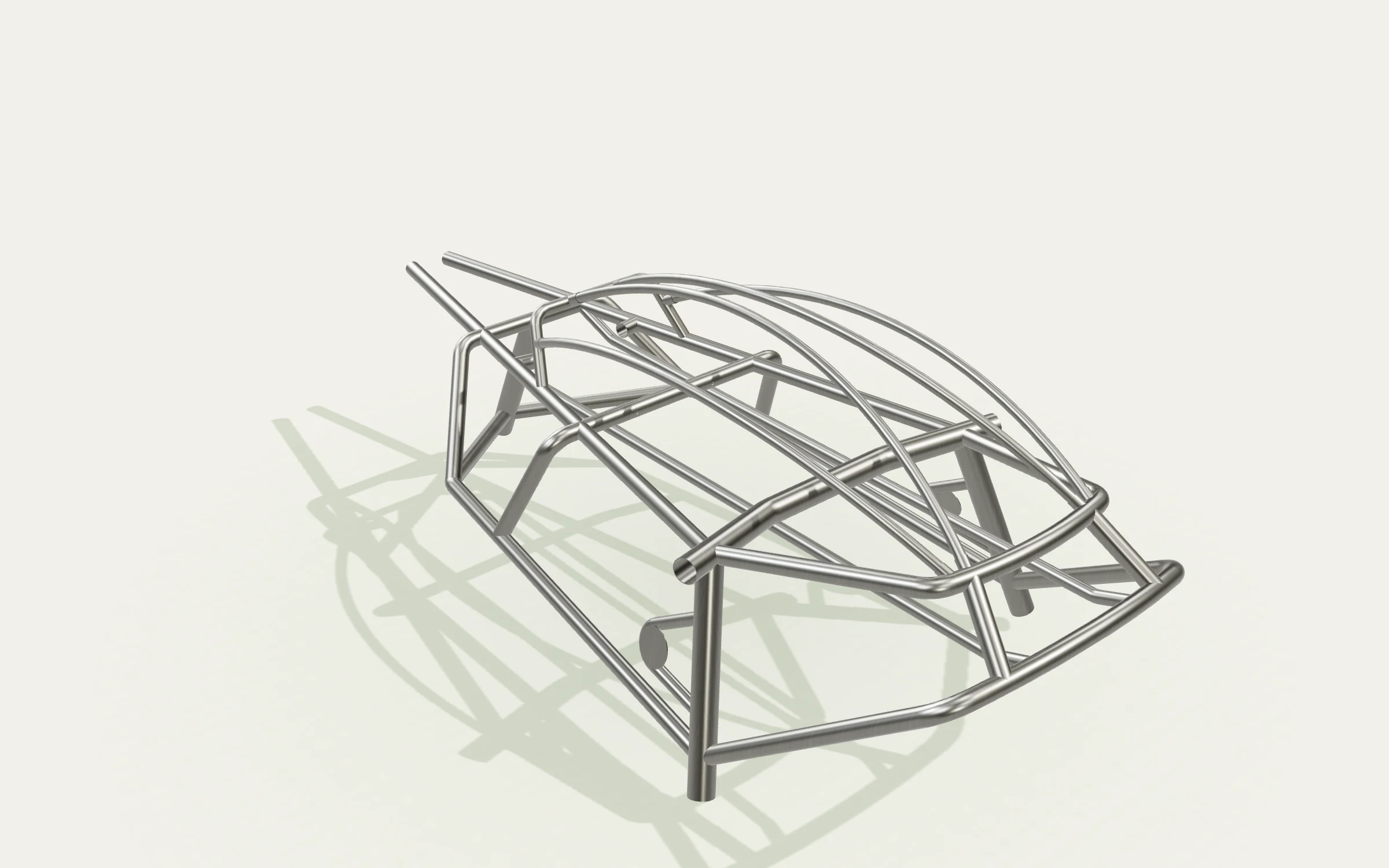
A welded titanium frame, long-travel landing gear and carbon rotor blades form the working core of TAMML.
VIEW IN 3D ↗TITANIUM, WHERE IT MATTERS.
The welded tubular titanium structure carries the powerplant, landing gear, electronics and mission equipment. Its open architecture makes the aircraft’s systems accessible for servicing.
Welded titanium
Primary airframe structure
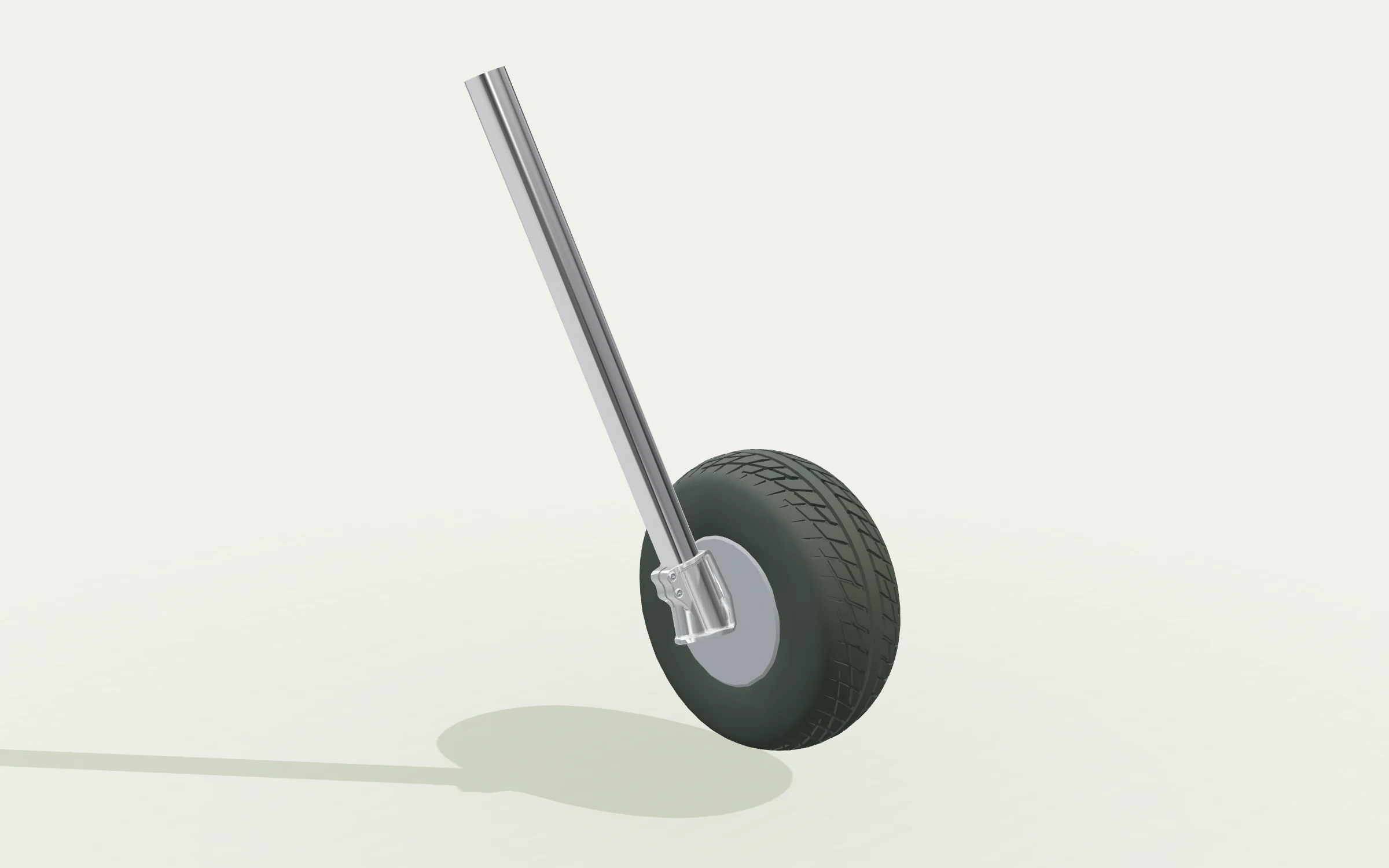 VIEW IN 3D ↗02 / LANDING GEAR
Long-travel shock-absorbing struts support landing and ground movement. Electric wheel drives turn the undercarriage into a self-propelled platform.
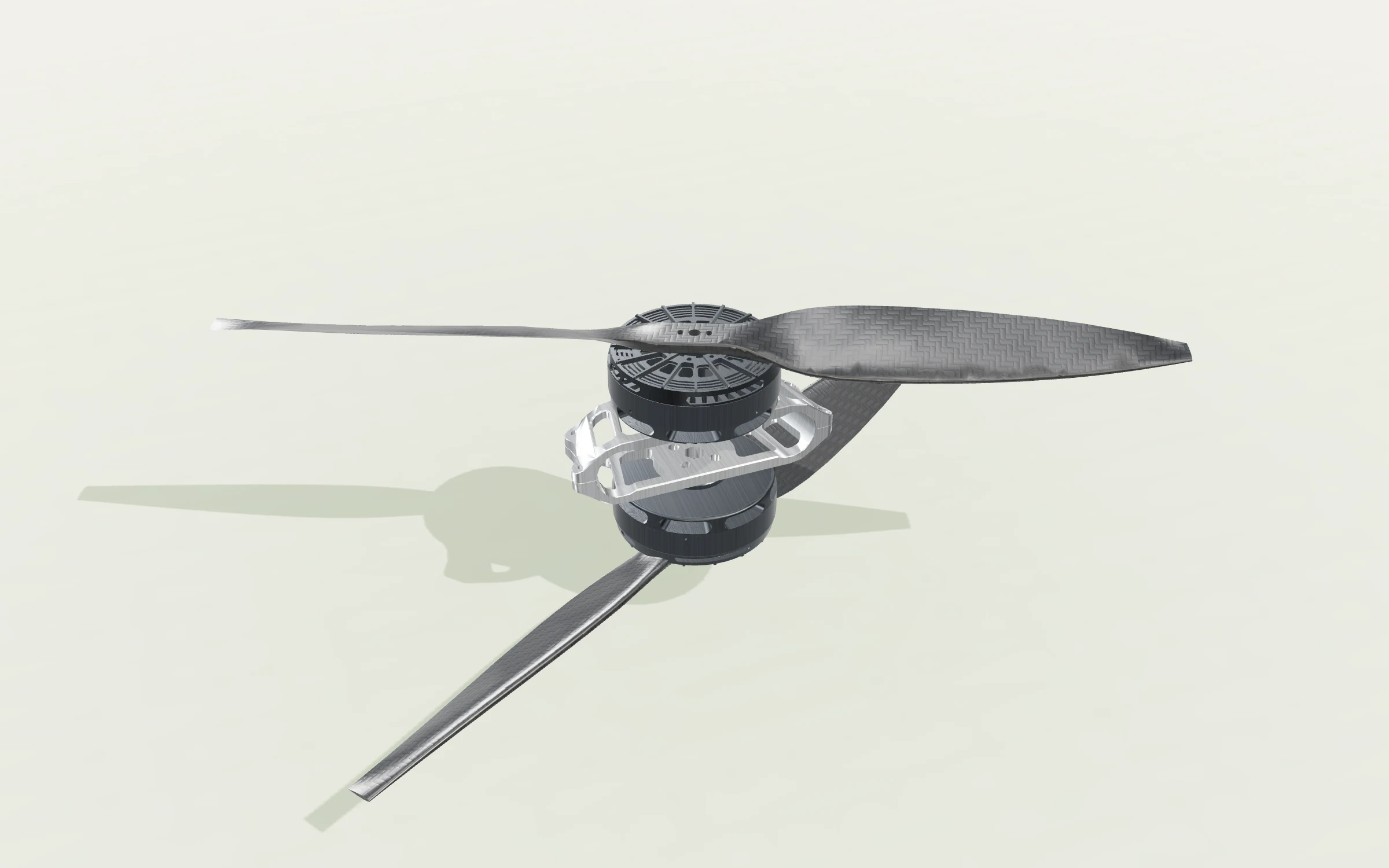 VIEW IN 3D ↗03 / FLIGHT CONTROL
Three coaxial pairs provide six control propellers. Independent, redundant power supplies support the electric control system.
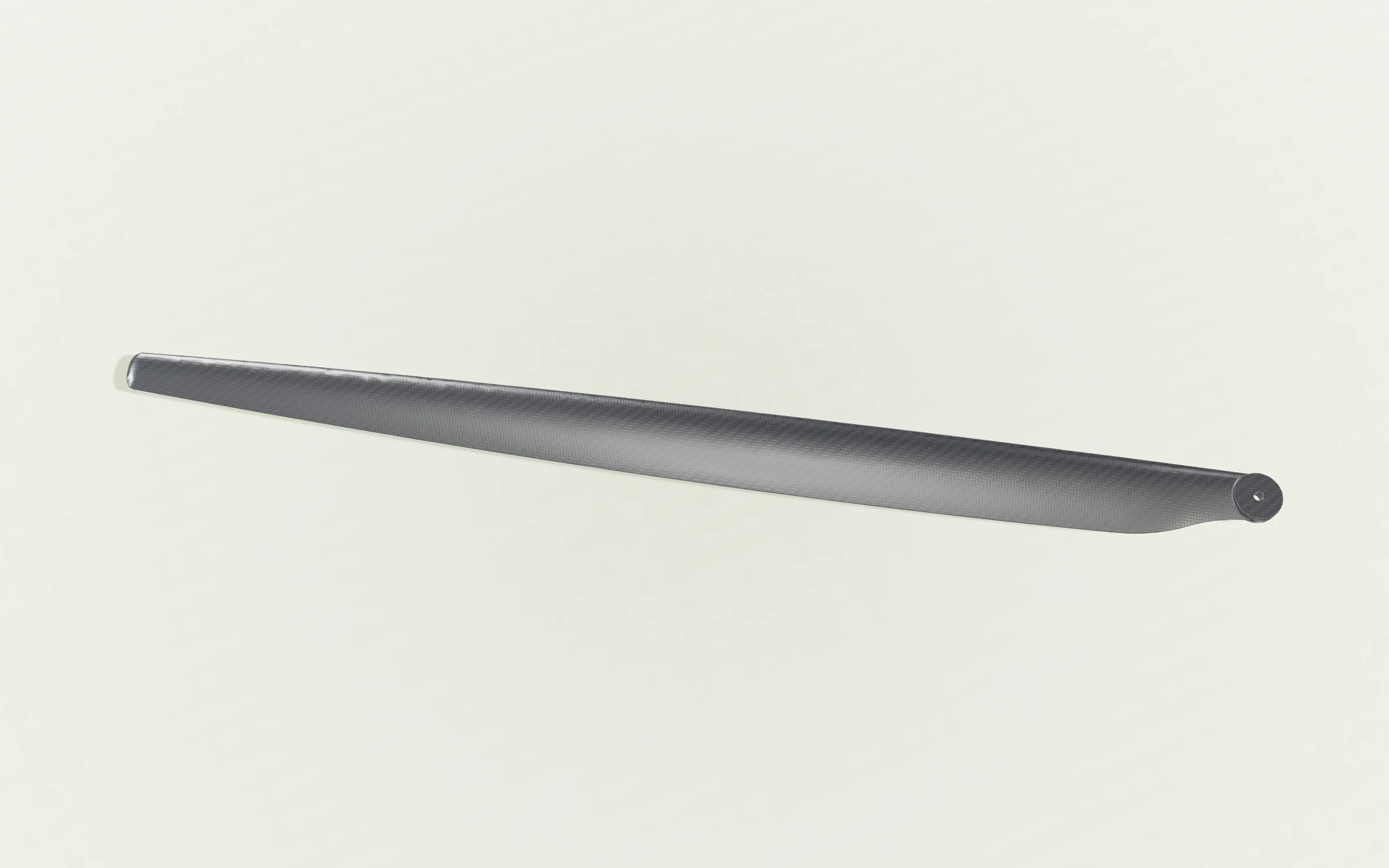 VIEW IN 3D ↗04 / ROTOR BLADES
Quick-release carbon blades with reinforced titanium leading edges combine a thin profile with low-noise operation and straightforward removal for transport. TAMML is quieter than multicopters of comparable payload capacity.
ADAPT THE OUTER LAYER
Replaceable IR-reducing covers in Woodland, Arid, Maritime and Arctic camouflage. High-visibility orange is reserved for humanitarian assistance and disaster relief (HADR).
Coaxial lift. Distributed electric control.
A modular aircraft built around utility.
Start with the platform data. Bring the mass, envelope, power and data requirements of your equipment. Request the engineering package for the selected installation.
Dimensions, mass limits, propulsion, communications and servicing.
Download platform PDF ↓02 / DIMENSIONAL OVERVIEWAirframe dimensions and rotor sweep for site and transport planning.
Download dimension sheet ↓03 / CUSTOMER INTEGRATIONInstallation CAD, mounting and CG, power allocation, connectors and data ICD.
Request the package ↗PAYLOAD · ROUTE · NETWORK · FLEET
Bring the load, its power and data requirements, and the route you need to serve. We’ll work through the aircraft configuration, integration and ground-support setup with you.
TAMML / Sentinel Unmanned
Medium-lift. Multi-mission.